Best 120gsm Paper for Somatic Journaling: A Review for Grounded Dreamers

Overview
When I swapped my glass‑walled office for a quiet studio, the first thing I noticed was the silence of a well‑chosen sheet of paper. For a somatic practitioner, the tactile feedback of 120gsm paper isn’t a luxury—it’s a structural element in the Dream‑to‑Draft framework. In this review I compare three of my favorite heavyweight options and explain why they feel like the right foundation for a grounded journaling habit.
Testing Methodology
I spent two weeks using each brand in my daily morning and evening rituals, noting texture, bleed, archival quality, and how each sheet supported the paper vs. digital journaling guide. I wrote with a fountain pen, a brush‑tip marker, and a simple ballpoint to see how the paper handled different tools. All sheets were stored in the same wooden box I keep on my desk, so environmental variables were constant.
Feature Walkthrough
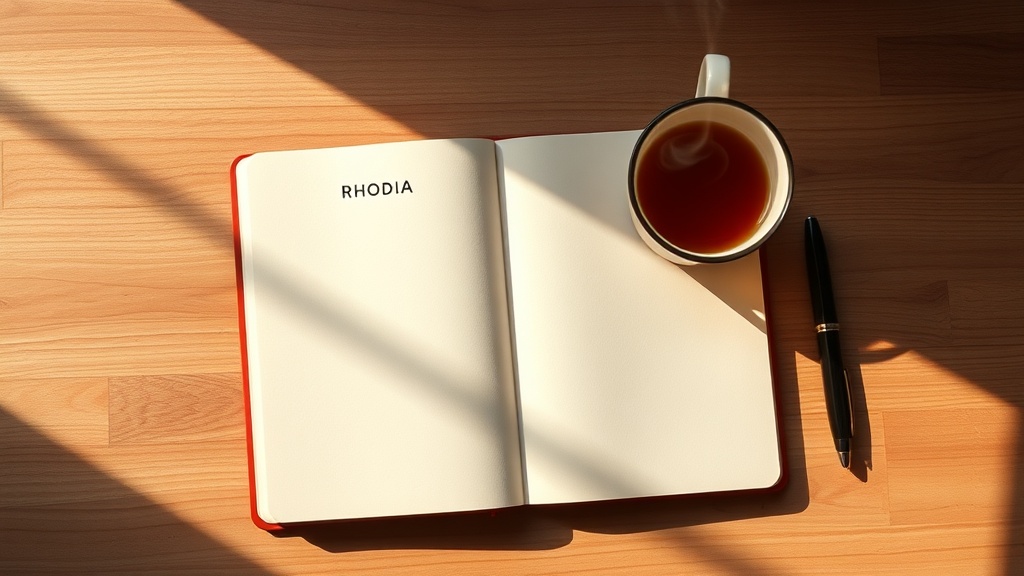
- Rhodia Webnotebook (120gsm, cream) – The classic “architect’s paper.” It offers a buttery smooth surface that lets a fountain pen glide without feathering. The cream hue reduces glare, encouraging a gentle focus. Tested for archival quality on Rhodia’s official specifications.
- Leuchtturm1917 Softcover (120gsm, ivory) – Slightly textured, giving a subtle grip that feels like a tactile reminder to slow down. The paper resists bleed even with water‑based markers, making it a good choice for color‑coded mood maps.
- Moleskine Classic (120gsm, white) – The most widely available, but its surface can feel a bit too slick for heavy ink. It does hold up well to erasing, which is useful for iterative drafts.
Pros & Cons
| Brand | Pros | Cons |
|---|---|---|
| Rhodia | Ultra‑smooth, excellent bleed resistance, archival‑grade | Higher price per notebook |
| Leuchtturm1917 | Subtle texture, great for mixed media, vibrant color options | Pages can detach slightly when overfilled |
| Moleskine | Readily available, sturdy cover | Surface can feel too slick for fountain pens |
Verdict
If you crave a paper that feels like a solid foundation—something you can trust to hold your thoughts without distraction—Rhodia wins hands down. It aligns with the White Space Is Load‑Bearing philosophy: the paper itself becomes a quiet scaffold for your inner architecture. Leuchtturm1917 is a worthy runner‑up for those who love a hint of texture, while Moleskine serves as a reliable backup when budget or availability is a concern.
Quick Tips for Choosing Your 120gsm Companion
- Test a single sheet with your favorite pen before buying a full notebook.
- Prefer cream or ivory tones to reduce visual strain during long writing sessions.
- Store notebooks in a dry, temperature‑stable environment—my wooden box (see the Digital Sunset Ritual) works perfectly.
Related Reading
- Paper vs. Digital Journaling: A Somatic Architect’s Guide – deeper dive into medium selection.
- White Space Is Load‑Bearing – how empty moments support creative flow.
FAQ
What makes 120gsm paper ideal for somatic journaling?
It’s thick enough to prevent bleed‑through, yet thin enough to stay flexible, providing a tactile cue that your nervous system can register as “grounded.”
Can I use colored ink on 120gsm paper?
Absolutely—most 120gsm sheets handle both fountain pens and water‑based markers without feathering.
How should I store my journals to preserve the paper?
Keep them in a cool, dry place away from direct sunlight. A simple wooden box (like the one I feature in my Digital Sunset Ritual) works well.
Gently,
Maya
Pros
- +Ultra‑smooth writing surface
- +Excellent bleed resistance
- +Archival‑grade durability
Cons
- −Higher price per notebook
- −Limited color options
Verdict
Rhodia Webnotebook is the top choice for somatic journaling, offering the smoothest surface and best archival quality; Leuchtturm1917 is a strong runner‑up, while Moleskine serves as a budget‑friendly backup.