Proprioception: The Body's Blueprint for Trusting Yourself

Proprioception: The Body's Blueprint for Trusting Yourself
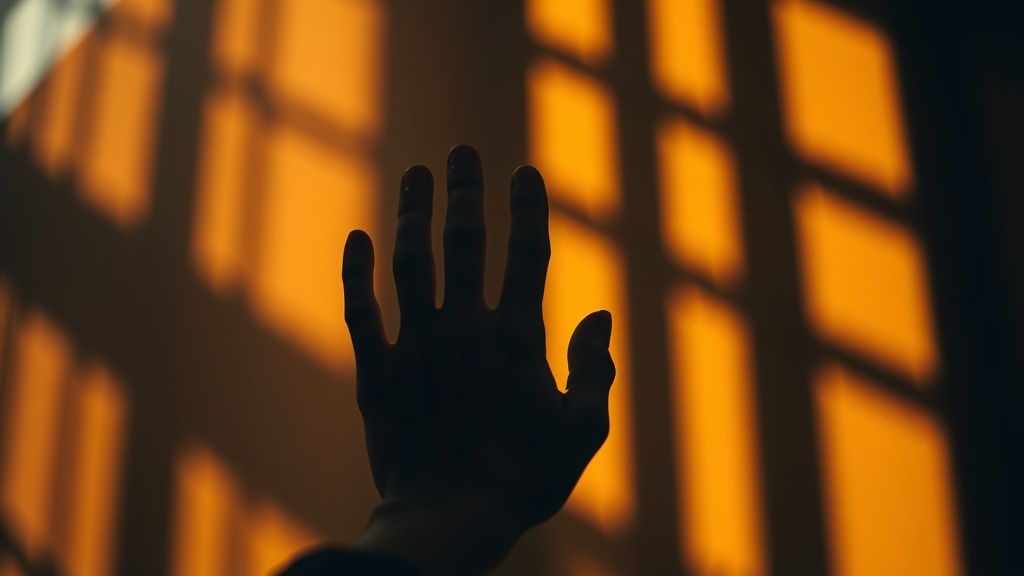
Close your eyes. Touch your nose. You just performed one of the most underrated miracles your body is capable of—not because it's difficult, but because you didn't need to think about it. Your body knew where your hand was. It knew where your nose was. It mapped the distance between them without a single visual cue.
This is proprioception: the sense that tells you where you exist in space. And I think it might be the most important metaphor for self-trust that nobody is talking about.
The sixth sense we forgot to name
When I was designing buildings, we talked constantly about spatial orientation—how a person moves through a lobby, where they instinctively look when they enter a room, how ceiling height changes the way a body breathes. Good architecture doesn't need signage. It guides you through feeling. The hallway narrows before it opens into a grand atrium not because of aesthetics alone, but because your body reads compression and release like a language.
Proprioception works the same way. It's the internal architecture that lets you navigate without external confirmation. You don't need a mirror to know you're sitting down. You don't need someone to tell you your shoulders are up around your ears—though, honestly, mine are right now, and I only noticed because I typed that sentence.
Here's what fascinates me: proprioception is trainable. It strengthens with use and atrophies with neglect. And I believe the same is true for self-trust.
How we lose the internal compass
Think about the last time you made a decision and immediately asked someone else if it was the right one. Not a high-stakes, life-altering decision—something small. What to eat. Whether to cancel plans. Whether your email sounded too direct.
That impulse to externally verify what you already know? That's proprioceptive decline of the psyche.
I spent years in this pattern. My firm had a culture of consensus that sounded collaborative but was actually corrosive. Every design choice ran through four rounds of feedback before anyone committed to a single line on the drawing. By the time I left, I couldn't choose a paint color for my own apartment without polling three friends and a Reddit thread. My internal compass hadn't broken—it had simply gone quiet from disuse.
Somatic educator Moshe Feldenkrais wrote extensively about this phenomenon in the body. He observed that people who had been injured or immobilized would lose proprioceptive accuracy in the affected area—not because the nerves were damaged, but because the brain had stopped listening. The signal was still there. The receiver had been turned off.
I think the same thing happens with self-trust. We don't lose the ability to know what we want or what's right for us. We just stop listening, because the noise of external opinion—social media, well-meaning advice, comparison culture—drowns out the quieter signal.
The architecture of inner knowing
In building design, there's a concept called wayfinding. It's the system of cues—light, texture, spatial rhythm—that helps a person navigate a structure without conscious effort. A well-designed hospital doesn't need color-coded floor lines if the architecture itself communicates direction. You feel your way to the exit.
I've started thinking about self-trust the same way. Instead of building elaborate external systems to validate my choices—pro/con lists, advice-seeking, endless research—I've been practicing something I call somatic wayfinding. It's embarrassingly simple.
Before making a decision, I pause. I place one hand on my sternum and one on my belly. I state the choice out loud—both options, if there are two. And then I notice. Not what I think. What I feel. Does one option create a subtle expansion in my chest? Does the other produce a micro-contraction in my gut?
This isn't woo. This is your interoceptive and proprioceptive systems doing exactly what they evolved to do—orienting you in the landscape of your own life.
Why the body knows before you do
Neuroscientist Antonio Damasio's somatic marker hypothesis proposes that emotional experiences create body-based signals that guide future decision-making. Your body literally keeps a ledger of what felt right and what didn't, and it offers that data back to you as sensation—a tightness, a warmth, a pulling-away. The problem is that most of us have been trained to override these signals in favor of logic, productivity, or other people's comfort.
I think about this every time I catch myself saying "I don't know what I want." Because usually, I do know. My body has been saying it clearly. I've just been treating the signal like noise.
In my journal last week, I wrote: You don't need more information. You need five seconds of silence and the willingness to hear what's already there.
Rebuilding proprioceptive trust: a practice
If self-trust is like proprioception—trainable, atrophiable, recoverable—then rebuilding it requires the same approach physical therapists use to restore balance after injury: small, consistent, low-stakes practice.
Here's what I've been doing. I'm not calling it a protocol because the moment I systematize something, it becomes another performance metric, and we've already established that's a trap (see: every other post I've written).
Morning body scan, reframed. Instead of scanning for tension or discomfort—which turns the body into a problem to solve—I scan for aliveness. Where do I feel most awake? Most present? That area gets my attention first. Not because it needs fixing. Because it's already working.
The one-breath decision. For low-stakes choices—what to wear, what to eat, which route to walk—I give myself one breath to choose, then I commit without looking back. Not because speed is a virtue, but because the first impulse is usually the proprioceptive one. The second-guessing is the override.
Evening review, but not the kind you think. Before my digital sunset (phone goes in the box at 9 PM, non-negotiable), I ask myself one question: When did I trust myself today, and what happened? Not "did I make the right choice." Just: when did I listen, and what unfolded? This retrains the brain to notice self-trust as an event worth recording, rather than dismissing it as unremarkable.
The blueprint you already have
I used to think self-trust was something you built from scratch—a new structure erected on cleared land. But the more I sit with it, the more I think it's a restoration project. The blueprint already exists. It's been encoded in your body since before you could speak. You knew how to reach for what you wanted. You knew how to pull away from what felt wrong. You knew how to orient yourself in space without anyone telling you where to stand.
Somewhere along the way, you started outsourcing that knowledge. To mentors, to algorithms, to the loudest voice in the room. And the proprioceptive system—the one that says I know where I am, I know what I need, I don't need to look—went quiet. Not dead. Quiet.
The invitation isn't to build something new. It's to stop drowning out what's already there.
Close your eyes. Touch your nose. You knew exactly where to find it.
Trust that.
Gently,
Maya