Why the Dream‑to‑Draft Framework Beats Traditional Goal‑Setting in 2026

What is the Dream‑to‑Draft Framework?
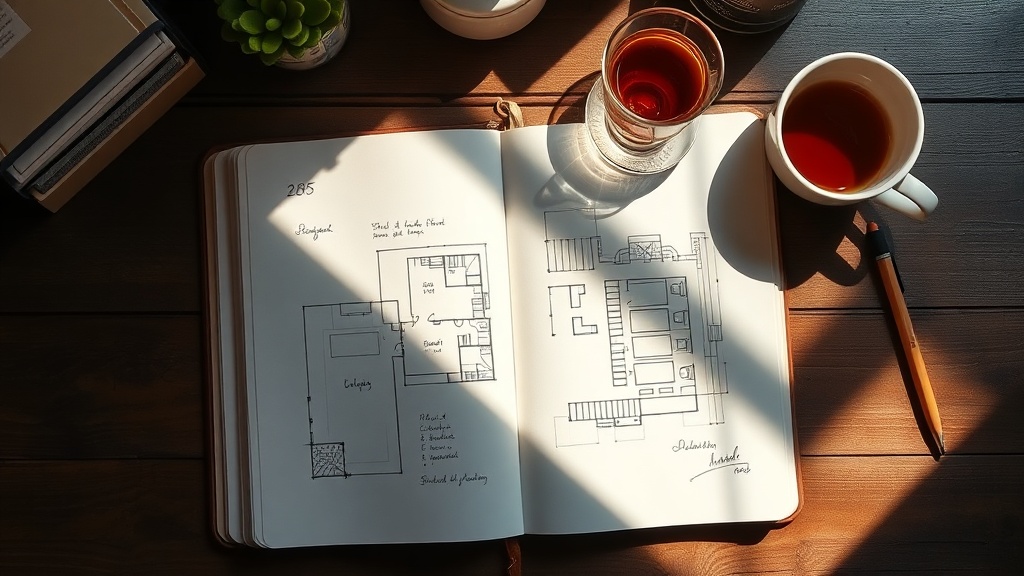
At its core, the Dream‑to‑Draft framework is a somatic twist on traditional planning: you start with a vivid, embodied vision (the "dream") and immediately translate it into a concrete, actionable sketch (the "draft"). Unlike abstract goal statements, this method anchors intention in bodily sensation and visual structure, mirroring how an architect drafts a building before construction.
For a deeper dive into how I blend architecture with journaling, see Paper vs. Digital Journaling: A Somatic Architect’s Guide.
How does it differ from traditional goal‑setting?
Traditional goals often follow the SMART formula—Specific, Measurable, Achievable, Relevant, Time‑bound. While useful, SMART treats goals as static statements. The Dream‑to‑Draft framework adds two crucial layers:
- Somatic anchoring: You first feel the emotion of achieving the outcome, then sketch it, turning abstract desire into a tactile map.
- Iterative drafting: Just as architects revise blueprints, you revisit the draft weekly, adjusting line‑weight and scale as life shifts.
Harvard Business Review notes that rigid goals can backfire when circumstances change (The problem with goals). Dream‑to‑Draft embraces fluidity while keeping direction.
Need a tool kit? Check out Minimalist Somatic Journaling Tools for the paper, pen, and posture aids that make drafting feel natural.
Why does it work better for grounded dreamers?
Grounded dreamers value radical honesty and the "messy middle" of transformation. By externalizing the dream onto paper, you create a visual contract with yourself—one you can stare at during moments of doubt. Research on embodied cognition shows that visual‑spatial representations improve commitment (Kornblum & Dell, 2022).
For those wrestling with anxiety, the framework doubles as a calming ritual. Pair it with one of the 5 Somatic Practices to Calm Anxiety for a double‑dose of grounding.
How can you start using it today?
- Set a 10‑minute timer. Close your eyes, breathe, and let a specific desire surface (e.g., "more focused work mornings").
- Translate that feeling into a sketch. On a fresh page, draw a simple diagram—perhaps a sunrise over a desk, arrows indicating energy flow.
- Label the draft. Write one actionable step beneath the image (e.g., "Create a morning ritual with a 5‑minute meditation").
- Review nightly. Incorporate the draft into your nightly somatic journaling ritual and adjust as needed.
For a seasonal spin, see the 6 Pillars of an Age‑Defying Lifestyle for Spring 2026 and align your drafts with the season’s renewal energy.
Takeaway
The Dream‑to‑Draft framework turns vague ambitions into living blueprints you can see, touch, and revise. By marrying somatic awareness with architectural drafting, you gain a flexible yet concrete roadmap—exactly what grounded dreamers need to thrive in 2026.