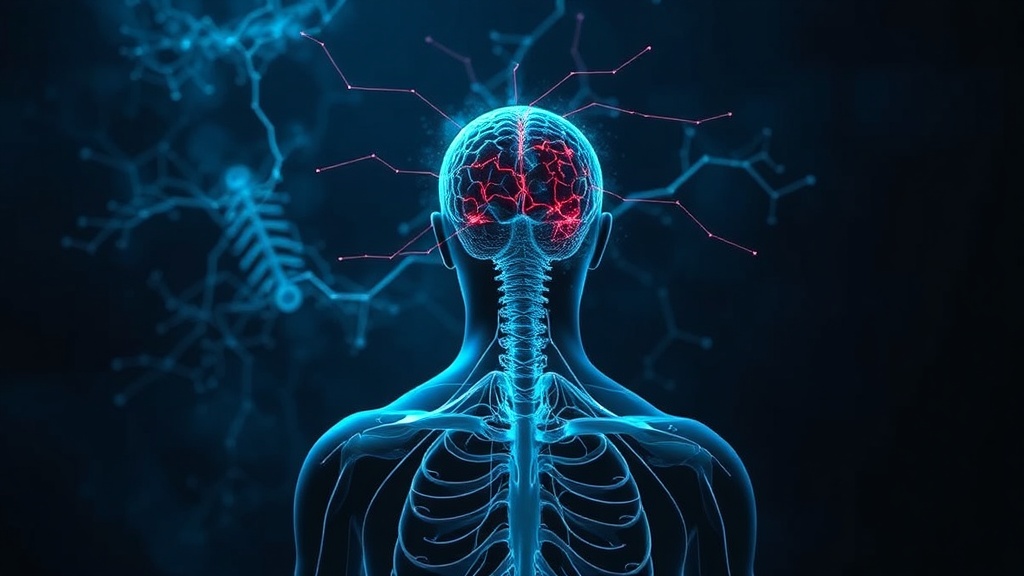
Why Your Body Holds On to Stress Long After the Threat Is Gone

Recent studies in neurobiology suggest that even after a perceived threat passes, the body can remain in a state of high physiological arousal for years. This isn't just a mental loop; it's a physical blueprint etched into your nervous system. When we talk about stress, we often focus on the external trigger—a deadline, a loud noise, or a difficult conversation. However, the real work happens in the internal architecture of the autonomic nervous system. Understanding how your body stores these sensations is the first step toward redesigning your internal environment.
Stress isn't just a feeling; it's a structural event. When you experience a surge of cortisol or adrenaline, your body prepares for a physical response. If that energy isn't processed or released through movement or biological signaling, it settles into the tissues. This can manifest as chronic tension in the jaw, a tight chest, or a persistent sense of being "on edge" even when you are sitting in a quiet room. We'll look at why this happens and how to address the physical residue of stress.
Can Mental Stress Become a Physical Habit?
The brain is incredibly efficient at pattern recognition. If your environment frequently demands high-alertness, your nervous system begins to view that state as the new baseline. This is often referred to as a dysregulated state. Instead of returning to a calm, baseline level of functioning (the parasympathetic state), the body stays stuck in a sympathetic-dominant mode. This is why you might feel a sudden jolt of anxiety when things are actually going well—your body is essentially waiting for the other shoe to drop.
Think of it like a building that has been through a seismic event. Even if the shaking has stopped, the structural integrity is compromised. The beams are bent, and the foundation is shifted. In human terms, this means your biological "foundation"—your nervous system—is still bracing for an impact that isn't coming. This constant bracing consumes an immense amount of energy, leading to the fatigue often associated with long-term stress. To fix this, we can't just "think" our way out of it; we have to signal to the body that the building is stable.
How Do I Release Tension Stored in My Body?
Standard relaxation techniques often fail because they focus exclusively on the mind. If your body is convinced it is in danger, telling it to "relax" can actually feel frustrating or even threatening. Instead, we need to use somatic-based approaches that speak the body's language. This involves moving from top-down regulation (using the mind to calm the body) to bottom-up regulation (using the body to calm the mind).
Here are a few methods to consider for releasing stored tension:
- Proprioceptive Input: Heavy work or resistance. This might involve pushing against a wall or using a weighted blanket. This provides the brain with clear data about where your body ends and the world begins, which can be grounding.
- Temperature Shifts: A cold splash of water on the face or holding an ice cube can trigger the mammalian dive reflex, which naturally slows the heart rate.
- Rhythmic Movement: Swaying, rocking, or gentle shaking. These movements mimic the natural ways animals shake off a predator after escaping a threat.
For more detailed scientific explanations on how the nervous system reacts to stress, the Healthline resource on stress and the body provides excellent foundational information. It helps clarify why these physical sensations occur at a biological level.
Does My Body Always Need to Be in Control?
We are often taught that control is a virtue. In the realm of mental health and somatic awareness, however, excessive control is often a sign of a rigid nervous system. When we try to control every sensation or suppress every feeling, we actually create more internal friction. A healthy nervous system is flexible; it can move from high energy to low energy and back again without getting stuck.
If you find yourself constantly monitoring your internal state—checking to see if you're feeling anxious or if your heart is racing—you are actually practicing a form of hyper-vigilance. This is a common symptom of a nervous system that lacks a sense of safety. Rather than trying to control the sensation, try to observe it. Instead of saying "I am anxious," try saying "I am noticing a tightness in my chest right now." This small linguistic shift creates a distance between your identity and your current physiological state.
| State | Physical Sensation | Common Internal Experience |
|---|---|---|
| Sympathetic (Fight/Flight) | Rapid heart rate, shallow breathing, muscle tension | Urgency, anxiety, irritability |
| Dorsal Vagal (Shutdown) | Low energy, numbness, feeling heavy or disconnected | Depression, apathy, brain fog |
| Ventral Vagal (Safety) | Steady breath, relaxed muscles, presence | Connection, curiosity, calm |
Understanding where you reside on this spectrum can help you choose the right tool. If you are in a high-arousal state, you need grounding. If you are in a low-arousal (shutdown) state, you may need gentle stimulation or movement to bring yourself back to the present. For those interested in the clinical aspects of these states, the Psychology Today archives offer extensive articles on the nuances of the nervous system.
The goal is not to reach a state of permanent calm—that's an impossible architectural standard. The goal is to build a system that is capable of returning to center. By treating your mental wellness as a structural project, you can move away from a mindset of "fixing" yourself and toward a mindset of building resilience and capacity.