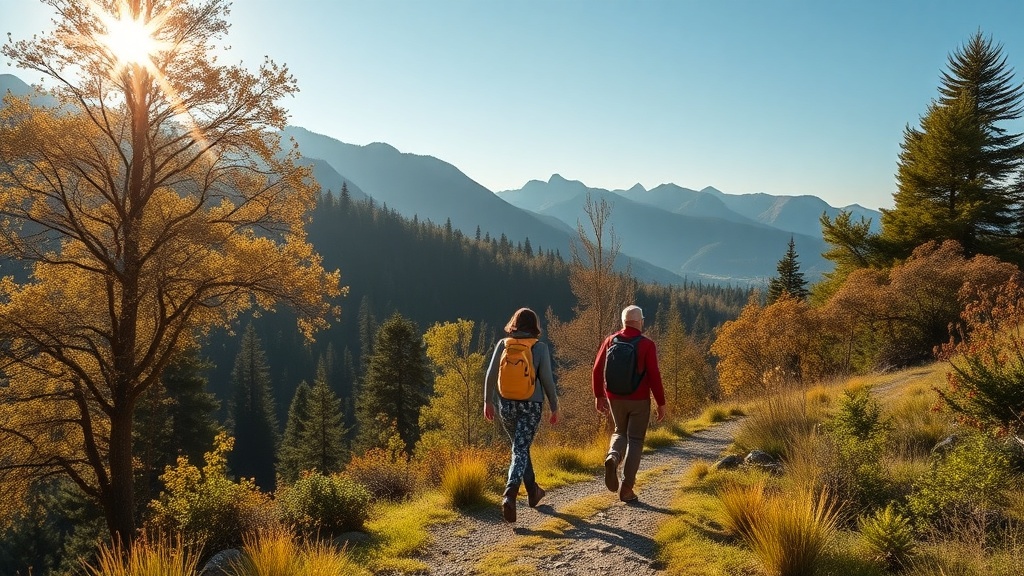
Why You Might Feel Better After a Gentle Walk in Nature

Imagine sitting at a desk with three browser tabs open, a half-finished spreadsheet on your screen, and a persistent tightness in your chest that won't subside despite having finished your tasks. You reach for a second cup of coffee, but the caffeine only increases your heart rate without improving your focus. This physiological state—high alertness paired with low mental clarity—is often a sign of a dysregulated nervous system. This article explores how a gentle walk in nature acts as a structural tool for recalibrating your biology, moving you from a state of high-stress "fight or flight" back into a grounded, functional baseline.
The Biological Mechanism of Nature Exposure
When we experience stress, our sympathetic nervous system takes the lead. This system is designed for immediate survival, characterized by elevated cortisol levels and a heightened heart rate. While this is useful for escaping a physical threat, chronic activation leads to burnout and mental fatigue. A walk in a natural setting, such as a local park like Central Park in New York or even a small wooded trail near your home, provides specific sensory inputs that signal to the brain that the environment is safe.
One primary mechanism is the reduction of "directed attention fatigue." In urban environments or digital workspaces, we rely heavily on directed attention—the ability to focus on a single task while filtering out distractions. This is an exhausting cognitive resource. Nature, however, offers "soft fascination." This refers to stimuli like the movement of leaves in the wind or the pattern of light through trees. These elements capture our attention without requiring effort, allowing the prefrontal cortex to rest and recover. This is not just a mental break; it is a biological necessity for cognitive longevity.
The Role of Phytoncides and Sensory Input
Beyond the visual, the chemical composition of natural environments plays a role in our well-being. Trees and plants emit organic compounds called phytoncides. When humans breathe in these compounds—common in pine or cedar forests—it has been shown to increase the activity of natural killer (NK) cells, which support the immune system. While you may not be walking through a dense forest every day, even the presence of certain botanical elements can trigger a relaxation response.
Furthermore, the tactile and auditory inputs of a natural setting provide a grounding effect. The uneven terrain of a trail requires subtle, unconscious adjustments in your gait, which pulls your awareness away from abstract, looping thoughts and back into your physical body. This is a fundamental principle of somatic regulation: moving from the "head" into the "body" to interrupt a cycle of rumination.
How to Structure a Nature Walk for Maximum Regulation
To derive the most benefit from a walk, it is helpful to treat it as a structured practice rather than a random errand. A "gentle walk" does not mean a brisk power walk intended to hit a certain heart rate zone on your Apple Watch. Instead, the goal is to move at a pace that allows your senses to remain open.
Step 1: The Digital Boundary
A walk cannot serve as a nervous system reset if you are still consuming high-density information. If you listen to a fast-paced, controversial podcast or a high-energy pop playlist, you are simply replacing one form of stimulation with another. To truly decompress, try one of the following:
- Ambient Soundscapes: Listen to low-frequency natural sounds or instrumental music with a slow BPM (beats per minute).
- The Silent Walk: Leave your headphones in your pocket. This allows you to engage in "auditory grounding," where you identify specific sounds like a distant bird or the rustle of grass.
- The Podcast Exception: If you must listen to something, choose a long-form, calm narrative that doesn't require intense analytical engagement.
If you find it difficult to transition away from your devices, you might first consider implementing digital detox rituals to help reclaim your mental space before heading outdoors.
Step 2: Sensory Layering (The 5-4-3-2-1 Technique)
Once you are in the natural environment, use a somatic grounding technique to anchor yourself. This prevents the walk from becoming a "moving meditation" where you simply ruminate on your to-do list. As you walk, identify the following:
- 5 things you can see: Look for micro-details, such as the texture of moss on a stone or the specific shade of green in a leaf.
- 4 things you can feel: The sensation of your feet hitting the ground, the wind on your cheeks, or the weight of your jacket.
- 3 things you can hear: The crunch of gravel, the wind in the canopy, or a distant car.
- 2 things you can smell: The scent of damp earth (petrichor) or pine needles.
- 1 thing you can taste: This could be the lingering taste of your tea or simply the sensation of air in your mouth.
Step 3: Integrating Movement with Breath
To further quiet the nervous system, synchronize your breathing with your stride. This is a way of using the body to influence the brain. A simple pattern is to inhale for four steps and exhale for six steps. The slightly longer exhale is a direct way to stimulate the vagus nerve, which triggers the parasympathetic nervous system (the "rest and digest" mode). This technique is a practical application of vagus nerve stimulation to achieve a state of calm.
Practical Implementation for Busy Schedules
A common barrier to nature exposure is the belief that it requires a significant time commitment or a trip to a national park. However, the benefits of nature are cumulative and can be integrated into a standard workday through "micro-dosing."
The 15-Minute Rule: Even a 15-minute walk around a local neighborhood with a few trees or a small community garden can lower cortisol levels. The key is the quality of attention, not the duration of the trip. If you can't get to a forest, find a patch of grass or a tree-lined street.
The Lunchtime Reset: Instead of eating at your desk while scrolling through news feeds, take your lunch outside. This creates a hard boundary between your "work mode" and your "recovery mode." This structural break prevents the mid-afternoon slump from becoming a total cognitive collapse.
The Evening Transition: Use a walk as a "buffer" between your professional responsibilities and your personal time. If you work from home, a 10-minute walk around the block can act as a symbolic "commute," signaling to your brain that the workday has officially ended. This can be a vital part of a low-stimulation evening, helping you transition into a state of rest without the jarring shift from high-stress work to complete stillness.
Summary of Benefits
To recap, a gentle walk in nature is not just a leisure activity; it is a physiological intervention. By engaging with natural stimuli, you are:
- Reducing Directed Attention Fatigue: Allowing your prefrontal cortex to recover through soft fascination.
- Regulating the Nervous System: Using sensory input and breathwork to move from sympathetic to parasympathetic dominance.
- Grounding the Body: Moving from abstract thought to physical sensation through tactile and auditory engagement.
The next time you feel the onset of mental fog or physical tension, do not reach for more caffeine or more digital distraction. Instead, step outside. Build a structure for your recovery that is as intentional as the structure you build for your work.